03 / Case Study
PC Express Digital Commerce Experience
Digital-commerce engineering within Loblaw’s online retail ecosystem, presented through the public PC Express product context.
My work focused on modernizing traditional web applications, creating responsive frontend experiences, developing APIs and serverless services, implementing secure authentication, and improving application reliability through testing and containerized development.
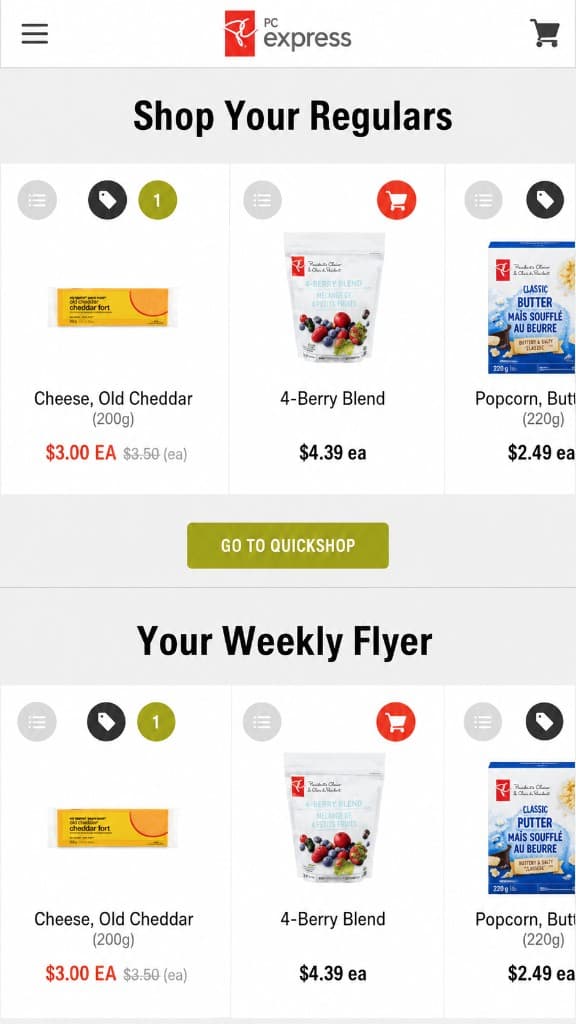
Historical PC Express product context. The image represents the public product ecosystem, not a claim of ownership over every visible feature.
Product context
What the product was
PC Express represents Loblaw’s digital grocery-shopping ecosystem, connecting customers with online browsing, ordering, and fulfillment experiences.
My documented responsibilities at Loblaw Digital covered the underlying engineering practices required by large digital products: frontend modernization, API development, cloud functions, authentication, database integration, testing, and maintainable delivery.
The challenge
Business and technical constraints
These were the product pressures the team needed to address. My engineering responses focused on the areas where I contributed.
Challenge 01
Legacy application modernization
Traditional web functionality needed to move toward faster, more maintainable single-page application patterns.
Engineering response
Converted traditional web application functionality into a React single-page application and improved navigation and frontend responsiveness.
Challenge 02
Consistent user experience
Frontend features had to remain responsive, stable, and understandable across a growing digital-product environment.
Engineering response
Maintained and enhanced React features with stability-focused practices and collaborated with designers on responsive UI and UX.
Challenge 03
Secure user access
Authentication and authorization needed to support reliable user-management flows across cloud-connected applications.
Engineering response
Implemented Firebase Authentication and OAuth provider integrations for secure authorization and user-management flows.
Challenge 04
Backend evolution
Existing services and data workflows needed clearer APIs, serverless delivery, and more maintainable backend implementations.
Engineering response
Developed Node.js and Express services, Python APIs, GCP serverless functions, and integrations with MongoDB, PostgreSQL, and PostGIS.
Challenge 05
Quality during change
Modernization work needed to preserve existing behavior while introducing testing and containerized development practices.
Engineering response
Added Jest unit and integration tests and used Docker to create consistent development and deployment environments.
My role
How I contributed
As a Full-Stack Engineer, I contributed to frontend modernization and supporting backend services across Loblaw Digital projects. My work included React application development, state management, API creation, cloud functions, authentication, testing, database integration, and collaboration with designers.
- React SPA modernization
- Frontend feature development
- State management
- Node.js and Express services
- Python APIs
- GCP serverless functions
- Firebase authentication
- OAuth integration
- Testing
- Docker environments
- UI and UX collaboration
What I implemented
Personal engineering contributions
Work is grouped by delivery surface. These points describe what I personally built, supported, or contributed—not the full product ownership of every visible interface.
Frontend
SPA modernization and responsive experience work within Loblaw Digital projects.
- Converted traditional web application functionality into a React single-page application
- Implemented JavaScript state-management patterns
- Improved navigation and frontend responsiveness
- Maintained and enhanced existing React features
- Applied React practices focused on stability and maintainability
- Developed TypeScript and AngularJS interfaces for supporting solutions
- Collaborated with designers on responsive UI and UX
- Used Tailwind CSS and Material UI where appropriate
Backend & APIs
API, serverless, and data work supporting digital-commerce applications.
- Developed Node.js and Express services
- Worked with MongoDB-backed functionality
- Designed RESTful APIs
- Built serverless functions on Google Cloud Platform
- Developed Python APIs using FastAPI
- Re-engineered legacy PHP backend functionality using Flask
- Integrated data from PostgreSQL and PostGIS
- Supported reliable frontend-to-backend communication
Integrations
Authentication and cloud-connected services for secure digital-product access.
- Implemented Firebase Authentication
- Integrated OAuth providers
- Supported secure authorization and user-management flows
- Connected applications to GCP serverless functions and data services
Quality & Collaboration
Testing, version control, and environments that supported modernization safely.
- Developed unit and integration tests with Jest
- Added validation around frontend and API behavior
- Used Git for version control
- Used Docker to create consistent development and deployment environments
- Improved maintainability during application modernization
- Collaborated with designers on responsive product experiences
Product capabilities
System capabilities
Capabilities of the product environment. Not every capability visible in the concept visualization was personally implemented by me.
- Responsive commerce experiences
- Single-page application navigation
- Secure authentication
- Cloud-connected APIs
- Serverless backend functions
- Data-driven product workflows
- Responsive UI
- Automated testing
- Containerized development
Technical architecture
Modernization architecture
The modernization approach separated frontend concerns from backend and cloud services, allowing user-facing applications to evolve while maintaining clear API, authentication, data, and testing responsibilities.
Delivery surfaces
Frontend, backend, integrations, and quality
Frontend implementation
- React SPA modernization and state-management patterns
- Responsive UI collaboration with designers
- TypeScript and AngularJS support for related interfaces
Backend and API implementation
- Node.js, Express, FastAPI, and Flask service development
- GCP serverless functions
- MongoDB, PostgreSQL, and PostGIS data integrations
Integrations
- Firebase Authentication
- OAuth providers
- GCP serverless and cloud-connected APIs
Testing and reliability
- Unit and integration tests with Jest
- Frontend and API behavior validation
- Dockerized development and deployment environments
- Git-based collaboration and delivery
Collaboration and delivery
How the work moved forward
- 01UI and UX collaboration with designers
- 02Cross-functional work across frontend, backend, and cloud concerns
- 03Modernization delivery within a large digital-product environment
Outcome and product value
What the engineering work supported
Qualitative outcomes only. No unverified business metrics.
Engineering outcome
- Helped transition traditional web functionality toward React SPA architecture
- Improved maintainability of frontend features
- Developed cloud-connected APIs and serverless functions
- Improved reliability through unit and integration testing
- Supported repeatable development through Docker environments
Product value
- Supported more consistent navigation and user interactions
- Strengthened authentication and authorization workflows
Team value
- Contributed engineering practices that supported safer modernization
- Collaborated across design and engineering on responsive experiences
Technology stack
Tools used on this engagement
- React
- JavaScript
- TypeScript
- AngularJS
- Node.js
- Express
- Python
- FastAPI
- Flask
- MongoDB
- PostgreSQL
- PostGIS
- GCP
- Firebase Auth
- OAuth
- Jest
- Docker
Reflection
What I learned
This period gave me a strong foundation in modernizing production software without losing sight of existing users and operational constraints. It strengthened my ability to work across frontend, backend, cloud, authentication, and data concerns within a large digital-product environment.